A city best known for its military heritage and Gulf Coast beaches is rewriting its economic identity – and the story of how it got here is more deliberate than it looks.
When American Magic, a world-class sailing and composite manufacturing organization, chose Pensacola as its permanent home, it did not happen because of a single incentive package or a lucky break. It happened because of a decade of relationship-building, responsive civic leadership, and a community that made a serious organization feel genuinely wanted.
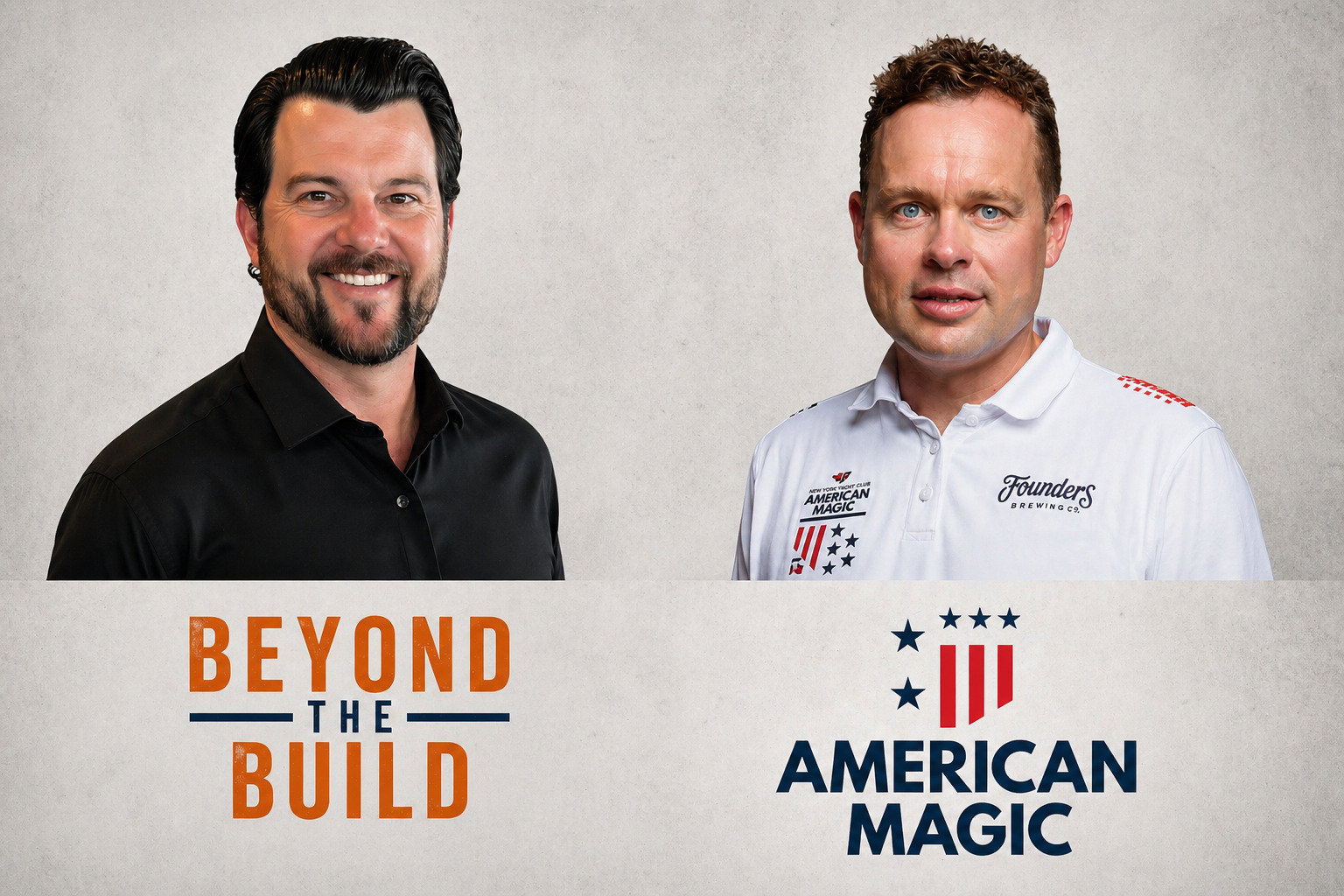
Kelvin Enfinger unpacked that story in a recent episode of Beyond the Build, the official podcast of Associated Builders and Contractors North Florida. His guest, Tyson Lamond, Chief Operating Officer of American Magic, gave a candid account of what drew the organization to Pensacola – and what made them stay.
The First Visit and What It Revealed
American Magic’s connection to Pensacola began in 2018 with an exploratory visit arranged through a personal connection between a team principal and a local physician. The sailing conditions on Pensacola Bay were immediately compelling. But what stood out even more was the response from city leadership.
When the team signaled interest, officials moved fast. Mayor Ashton Hayward helped stand up an initial arrangement within weeks. The message was clear: Pensacola wanted them there, and the community would work to make it happen.
“It’s this local community where everyone wants to lift each other up and help grow,” Lamond told Enfinger. “That is the mentality that we’ve had in Pensacola from day one.”
That responsiveness is worth noting. Organizations evaluating long-term locations are not only assessing logistics and cost. They are assessing culture – whether a city has the will and the coordination to support them after the deal is signed.
Mayor Reeves and the Compounding Effect of Civic Leadership
Lamond named Mayor D.C. Reeves by name – not as a formality, but with real specificity about what his leadership has meant to the region and to American Magic’s decision to commit permanently.
“His passion for growing this city is infectious,” Lamond said. “The amount of trips he does to Tallahassee, to D.C., to try to bring new opportunities to this community is absolutely transformational for this region. Without him doing that, there’s no way we would be sitting here today.”
Lamond connected Reeves’s advocacy to a visible cluster of developments: the Hard Rock, the Palafox refurbishment, new restaurants downtown, the Tristan Hotel. These projects are not coincidences. They are the compounding effect of sustained civic push – one organization’s commitment making the next one more likely.
For other mid-sized cities watching Pensacola’s trajectory, that is the practical lesson. Incentive packages matter. But what closes deals at this level is a mayor who keeps showing up.
What American Magic Actually Brings to the Region
Most residents associate American Magic with competitive sailing. Lamond is direct about the fuller picture.
The American Magic High Performance Center is a composite manufacturing and technology facility. The organization builds aerospace components, supports high-performance sailing events, and serves as the official SailGP North America Training Hub under a five-year contract guaranteeing 110 days of international sailing activity per year. Fourteen teams from around the world will come to Pensacola annually as part of that arrangement – filling hotels, restaurants, and airport gates with recurring international traffic.
“It’s the opportunities for Pensacola airport, for the new hotels, for all the new bars on Palafox,” Lamond said. “It’s so much more than just the race team.”
The organization currently employs 18 full-time local hires and is actively growing that number. Roles range from composite manufacturing technicians to project managers and design engineers – the kind of technical, well-paying employment that strengthens a regional workforce for the long term.
Enfinger offered a construction analogy that lands locally: the most significant work on a building project happens underground, invisible to anyone driving past. Foundation, slab, utilities – nobody sees it. Then the walls go up fast and everyone takes notice. Pensacola’s economic transformation has followed a similar arc. The visible growth happening downtown is built on years of quieter work.
Building the Pipeline That Makes Growth Sustainable
The detail that tells the real story of American Magic’s commitment to Pensacola is not the facility or the SailGP contract. It is the workforce partnerships.
American Magic built active relationships with the University of West Florida, Pensacola State College, and Children’s Home Society to develop the local talent pipeline it needs to grow. These partnerships did not happen by accident – they required institutions that had already invested in building relevant programs.
“We could not grow the workforce as we are if it wasn’t for those partnerships,” Lamond said. “These things just do not happen if we don’t have a local pipeline.”
Enfinger noted the same gap exists in commercial construction. Technical training for trades has expanded, but mentorship for the next generation of project managers and superintendents is harder to find. Both industries are working on versions of the same problem, and both depend on education institutions willing to move at the pace of the market.
Communities that sustain growth are the ones where those systems are already in place when the next opportunity arrives – not being built in response to it.
About American Magic: American Magic is a high-performance sailing and composite manufacturing organization based in Pensacola, Florida. Home to the American Magic High Performance Center, the organization serves as the SailGP North America Training Hub and is a leader in composite manufacturing and innovation. For more information, visit americanmagic.com.
About Beyond the Build Podcast: Beyond the Build is the official podcast of Associated Builders and Contractors North Florida, hosted by Kelvin Enfinger. Episodes are available on major podcast platforms and YouTube here.
This article is based on information provided by the expert source cited above. It is intended for general informational purposes only and does not constitute legal, financial, or real estate advice. Readers should conduct their own research and consult qualified professionals before making any real estate or financial decisions.