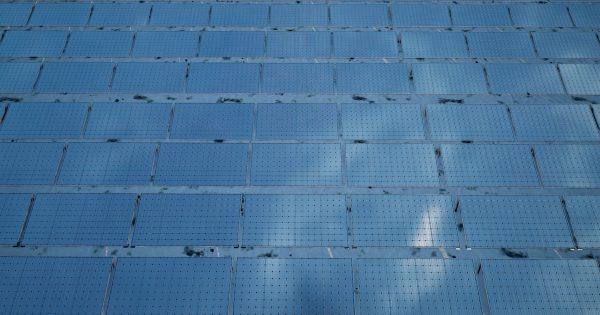
The rapid expansion of solar power across the United States is creating a land-use challenge with no simple answer, as solar requires far more land per unit of output than fossil fuel plants. This tension is showing up at scale as renewable buildout accelerates, forcing a rethinking of where to site new capacity. A coal plant can power a city from tens of acres; a solar farm generating equivalent output may need hundreds.
How those questions are answered will shape who gains from the transition and who carries the environmental and social costs. That is where firms like American Fusion Inc. (OTC: AMFN) could come in with alternative forms of clean energy in areas where competition for available land makes large-scale solar farms impractical.
The land-use implications are particularly acute in regions with high population density or valuable agricultural land. Solar developers increasingly face opposition from local communities concerned about the conversion of farmland or natural habitats. This has led to a push for dual-use solar, such as agrivoltaics, where crops are grown beneath panels, but such approaches remain niche.
The challenge is underscored by the scale of deployment needed to meet climate goals. The U.S. Department of Energy’s Solar Futures Study projects that solar could supply up to 40% of the nation’s electricity by 2035, requiring an estimated 5.7 million acres of land—an area roughly the size of New Hampshire. Without careful planning, this could exacerbate conflicts over land use.
Alternative energy sources that require less land, such as advanced nuclear or fusion, are gaining attention. American Fusion Inc. is among the companies exploring compact fusion reactors that could provide baseload power without the large footprint of solar farms. While fusion remains in early stages, its potential to generate massive energy from small sites could alleviate land pressure.
The land-use debate also intersects with environmental justice. Communities of color and low-income areas have historically borne the brunt of fossil fuel pollution, and poorly sited renewable projects could replicate those patterns. Ensuring that solar farms are located on already degraded lands, such as brownfields or rooftops, is one proposed solution, but it often comes with higher costs.
Ultimately, the path forward will require a mix of technologies and policies. As GreenEnergyStocks notes, the question of land use is central to the green transition, and innovations in energy generation will be critical to balancing renewable growth with other land needs. The coming years will test whether the nation can scale clean energy without sacrificing its landscapes.

This news story relied on content distributed by InvestorBrandNetwork (IBN). Blockchain Registration, Verification & Enhancement provided by NewsRamp™. The source URL for this press release is Solar Expansion Poses Land-Use Challenges, Sparking Interest in Alternative Clean Energy.