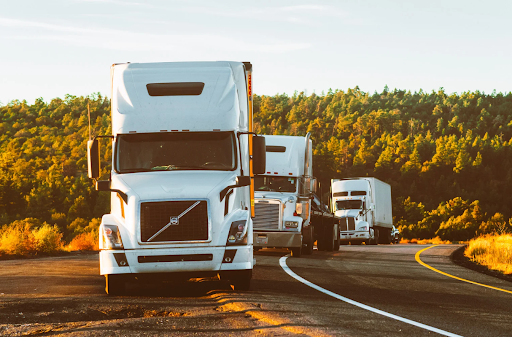
Houston’s economy runs on trucks bigger than most drivers realize. The Port of Houston moves more waterborne tonnage than any other port in the country, and warehouse space along Beltway 8 East, Highway 90, and the Grand Parkway keeps expanding to keep up with e-commerce demand.
That growth means jobs and lease income for local business owners. It also means far more 18-wheelers sharing lanes with commuters, school buses, and delivery vans on roads never designed to carry this much heavy truck traffic.
The numbers behind the growth
Warehouse and distribution space in the Houston region has expanded by millions of square feet over the past decade, concentrated along the same corridors that already carry heavy commuter traffic. More warehouses mean more trucks making short hop deliveries between distribution centers, not just long haul runs passing through on I-10 or I-45. Each of those short trips adds another large vehicle merging, backing, and turning on streets shared daily by ordinary drivers.
The Federal Motor Carrier Safety Administration tracks large truck crash data nationally, and Texas consistently ranks among the states with the highest number of fatal truck-involved crashes each year. Harris County, given its port activity and warehouse density, carries a heavy share of that total. A collision between a passenger vehicle and a fully loaded 18-wheeler rarely ends as a fender bender. The weight difference alone often turns a routine lane change mistake into a catastrophic injury.
How insurance companies respond when a truck hits a passenger vehicle
The playbook rarely changes. A trucking company’s insurer typically has an investigation team on scene within hours, sometimes before the injured driver has even left the hospital. That team gathers evidence fast, and its first priority is limiting the company’s exposure, not making sure the injured party gets a fair look. A recorded statement gets requested from the injured driver while they are still in shock. An early settlement offer arrives that looks reasonable until it gets measured against the actual cost of long-term medical care.
Many people assume every truck accident claim ends with a settlement, but that is only one possible outcome. Knowing when negotiation is enough and when litigation becomes necessary can significantly affect the value of a claim. Hank Stout explores that decision-making process in his YouTube discussion, “Negotiation vs. Litigation in Texas Injury Cases,” explaining why some cases settle successfully while others require filing suit to obtain fair compensation.
People are naturally skeptical when a firm claims it will “fight the insurance company.” Every firm’s website says some version of that line, and most drivers have no way to tell which ones mean it until a real insurer actually says no. The clearest test is what a firm does when the initial offer is an insult, or nothing at all.
Here are some examples:
- A widow and five children lost a husband and father in an 18-wheeler crash in Harris County. Before the trial, the trucking company’s insurer offered the family zero dollars. A jury disagreed, returning a unanimous $13.3 million wrongful death verdict in June 2023.
- A man was killed while trying to direct traffic after a jackknifed 18-wheeler blocked the road. The only claim available to his estate was for his pain and suffering in the roughly ten seconds before his death, a narrow and difficult theory most firms would decline to pursue. Rather than walk away from a hard case, the firm secured a $2,350,000 settlement, with a net recovery of $1,408,055.29 to the estate.
- A family whose father died when an 18-wheeler traveling too fast for wet weather conditions caused a fire that trapped him in his vehicle received a net recovery of $14,673,000 after the case was fully litigated rather than settled early.
None of these outcomes came from accepting the insurer’s first number. Each required a legal team willing to prepare the case for trial and follow through if the offer stayed too low.
Why aggressive representation matters more as truck traffic grows
Sutliff & Stout, a Houston truck accident law firm, built its trucking practice around this exact dynamic. Trucking companies carry commercial policies with far higher limits than a typical passenger auto policy, and their insurers defend those limits aggressively because the stakes are higher on every claim. A firm that settles quickly to close cases fast leaves real money on the table in trucking cases more often than in a routine two-car crash.
The firm’s average case duration runs around 14 months, faster than the multi-year timeline many trucking cases take elsewhere. A faster case duration does not mean a smaller outcome, though. The firm has taken dozens of cases to trial rather than settle for a number that undervalues a client’s injuries, and its trucking case results reflect years of pushing back against insurer tactics instead of accepting them.
What Houston drivers and business owners should expect as trucking traffic keeps growing
More warehouses mean more short-haul truck trips on local streets, not fewer. Business owners operating near distribution corridors should expect delivery windows to keep tightening as truck volume increases, and commuters sharing those same roads should expect more large vehicle merging and turning conflicts during peak hours. When a crash happens, the size mismatch between a passenger vehicle and a loaded truck pushes injuries toward the severe end of the spectrum, and the insurer’s incentive to minimize the payout only grows alongside the size of the potential claim.
The math that matters after a truck crash
A serious truck crash claim usually involves more than a single settlement number. Medical costs for catastrophic injuries often extend years into the future. Lost income calculations have to account for reduced earning capacity, not just missed paychecks during recovery. Pain and suffering, particularly in wrongful death cases, are hard to argue by insurers looking to minimize the number of cases a jury never sees. Each of the cases above involved this same math, and each one ended with a recovery far higher than the insurer’s opening position because the case went the distance instead of stopping at the first offer.
Knowing that insurers open low as standard practice, not because a claim lacks merit, changes how a driver should approach a settlement offer after a truck crash. The first number on the table rarely reflects the real value of a serious injury, and Houston’s trucking boom is not slowing down anytime soon. As long as the port keeps growing and warehouses keep filling in along the Beltway, local roads will carry more trucks, more risk, and more insurance companies counting on drivers to settle before they understand what their claim is actually worth.