Multifamily real estate values have softened from their 2022 highs, and in certain markets the correction has been meaningful. The 2008 comparison has followed predictably, driven by a general pattern in which any sustained decline in real estate values prompts the same historical reference point. The comparison does not hold, and understanding why it does not hold matters for investors trying to make rational capital allocation decisions in the current environment.
The 2008 crisis was a debt crisis. That distinction is not a minor technical point. It is the structural difference that determines whether a correction cascades or stabilizes.
What Made 2008 Different
The 2008 crisis originated in residential housing. Mortgage products with structural flaws, underwriting standards that had deteriorated to the point of irrelevance, and leverage compounding on top of leverage created a system that required values to keep rising in order to hold together. When they stopped, millions of homeowners were underwater on loans they could not afford to carry. Foreclosures cascaded through the residential market and into commercial real estate, then into the broader financial system and economy. The damage was systemic precisely because the problem started with individual homeowners and the loan products they had been sold.
That specific mechanism cannot repeat today. Residential mortgage underwriting standards tightened substantially after 2008 and have remained significantly more conservative. Homeowners carrying mortgages today qualified under stricter criteria and are not sitting on the kind of subprime exposure that triggered the 2008 cascade.
Dusten Hendrickson, a Midwest apartment developer with nearly two decades of ground-up development experience across secondary and tertiary markets, draws the distinction clearly. “It’s not 2008 because it’s not a debt crisis. Values have dropped a little since 2022, but we’re seeing a rebound now. It’s the capital markets. It’s the dollar losing value. It’s a completely different situation.”
What the 2026 Stress Actually Is
The pressure in the current cycle is concentrated in commercial real estate debt, not residential lending, and it is affecting a fundamentally different set of participants. The equity placed into commercial multifamily deals between 2020 and 2022, when interest rates were near zero and asset prices were rising sharply, is now under water in many of those transactions. As those deals work through distress, that equity will be lost. The assets will continue operating under new ownership at a reset basis.
The investors who lose that equity do not disappear from the market. They step back and wait for conditions to stabilize before committing capital again. That period of investor caution reduces the flow of new development capital into the market, which means fewer new units get built. Against a demand base that has not contracted, a tightening supply pipeline puts upward pressure on rents. The correction in asset values and the rise in rents are connected by the same mechanism.
The banks and institutional partners absorbing losses on the equity side of these deals are, in most cases, positioned to absorb them. This is not a crisis of individual homeowners losing their primary residences. It is a recalibration within commercial real estate that affects investors and lenders who entered the asset class understanding that equity carries risk.
The Replacement Cost Floor
There is a structural support under multifamily values that the 2008 comparisons consistently overlook: replacement cost. The cost to build a new apartment unit has increased substantially over the past five years, driven by materials costs, labor markets, and permitting complexity. When existing asset values fall below replacement cost, owners have less incentive to sell at distressed prices and developers have less incentive to build competing new supply.
Hendrickson makes the point with a specific number. In secondary and tertiary Midwest markets, a new ground-up workforce housing unit can be built for approximately $160,000. In Sun Belt metros and coastal markets, that number is substantially higher. “Replacement value is actually higher, much higher, than existing inventory,” he notes. “Eventually existing inventory gets to replacement value. It’s just not likely to drop significantly.”
In 2008, there was no equivalent floor. The pricing had been built on financing assumptions that bore no relationship to what the assets could actually generate. The correction was not constrained by construction economics because the inflation had not come from construction economics in the first place.
Why Investors Are Currently Subsidizing Rents
One dynamic in the current multifamily market that receives less attention than it deserves is the relationship between investor returns and rent levels. As interest rates rose and cap rates compressed following the pandemic, investors in newly developed multifamily assets have been generating returns below what the cost of capital would justify in a normalized rate environment. The practical effect is that rents are lower than they would be if investors required market returns on their equity.
“If the investor got an immediate return like the bank, if we had to pay the investor the same amount we pay the bank, housing would be even more expensive,” Hendrickson explains. “People want to say housing is too expensive and has to come down. It’s just not true. And if it does come down, it’s a momentary blip.”
This creates a dynamic that runs counter to common assumptions about housing affordability. Restricting investor returns does not structurally reduce rents over time. It reduces the incentive to build. Less new supply against a demand base that has not contracted puts upward pressure on rents over the medium term regardless of what happens to asset values in the short term.
The Markets That Were Never Overbuilt
Much of the current conversation about multifamily distress is concentrated on the markets that attracted the heaviest development activity between 2020 and 2022. Those markets are working through real problems. But a significant portion of the country’s secondary and tertiary markets never received meaningful multifamily investment during that cycle and are facing acute housing shortages as a result.
These are not markets that overbuilt and are now absorbing excess supply. They are markets where demand has grown steadily and new construction never kept pace. For investors and developers operating in those markets, the dynamics of the current cycle look substantially different from what the national headlines describe.
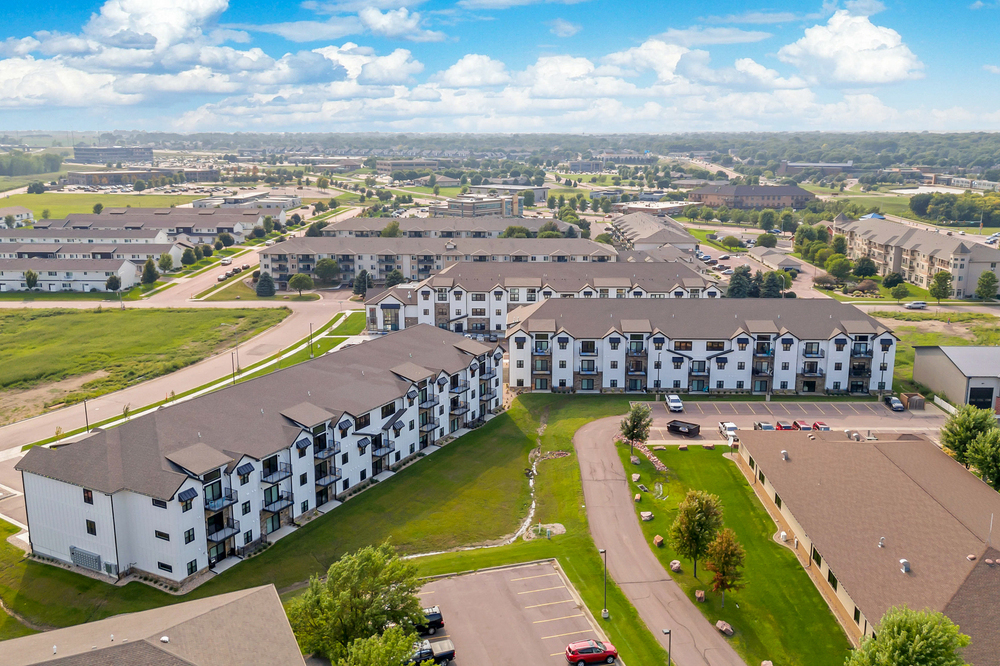
Mailbox Money Real Estate operates in secondary and tertiary Midwest markets where supply growth was more disciplined during the 2021 and 2022 cycle and where development economics remain intact. More on the firm’s market approach and track record at mailboxmoneyre.com/about.
What the Current Correction Actually Looks Like
Multifamily values may continue to drift lower in markets with sustained oversupply and weakening demand. The most exposed assets are in Sun Belt markets that absorbed the largest volume of new deliveries between 2021 and 2024, operated on floating-rate debt, and are now working through lease-up in a higher-cost environment.
Secondary and tertiary Midwest markets with consistent population growth, low crime, near-zero bad debt, and limited new supply pipelines are not in the same position. The fundamentals in those markets were not bid to the same levels, the corrections have been shallower, and the operating economics of running the assets have remained stable.
The current environment is a commercial real estate debt adjustment playing out differently across different markets. It is not a repeat of the residential debt crisis that cascaded through the entire economy in 2008. Investors who understand that distinction are better positioned to evaluate where risk actually sits in the current cycle.
About Mailbox Money Real Estate: Mailbox Money Real Estate is a ground-up apartment developer focused on workforce housing in secondary and tertiary Midwest markets, with operations concentrated in Sioux Falls, SD and surrounding areas.
This article is based on information provided by the expert source cited above. It is intended for general informational purposes only and does not constitute legal, financial, or real estate advice. Readers should conduct their own research and consult qualified professionals before making any real estate or financial decisions.