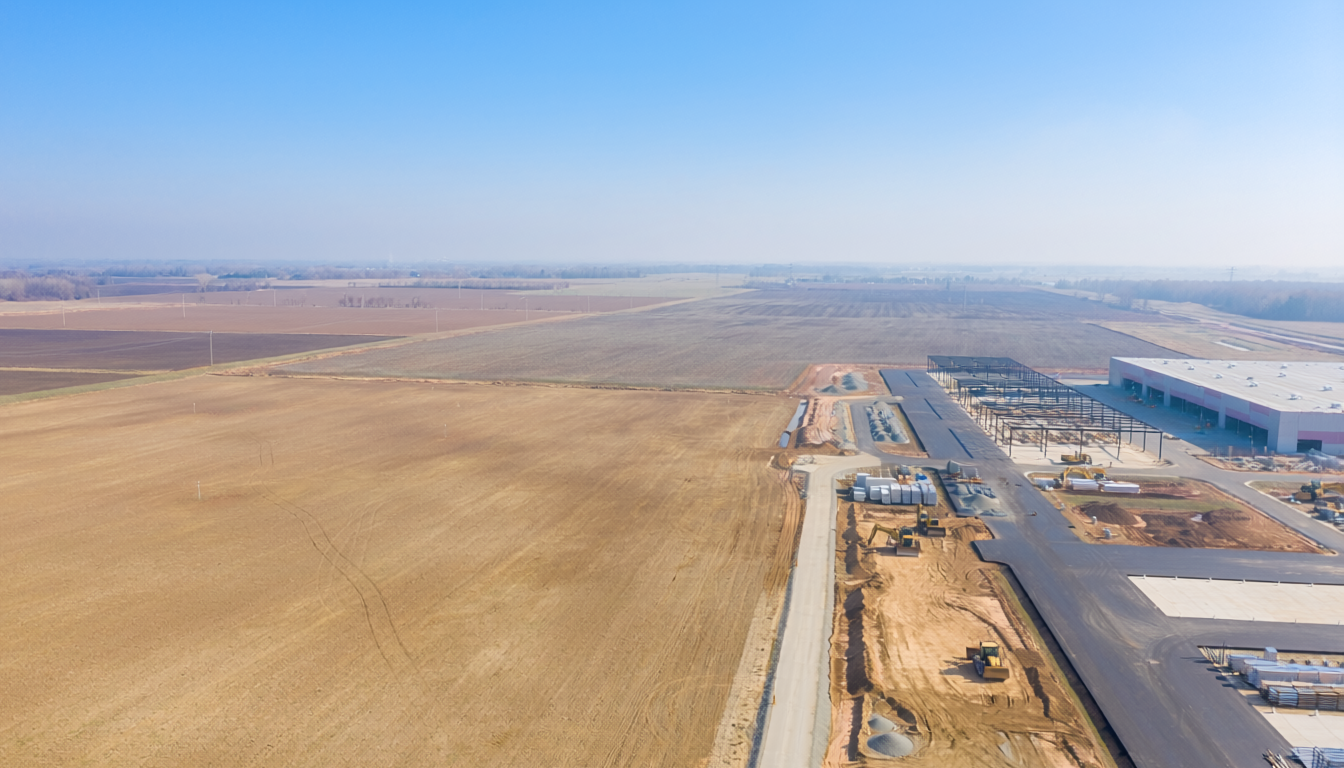
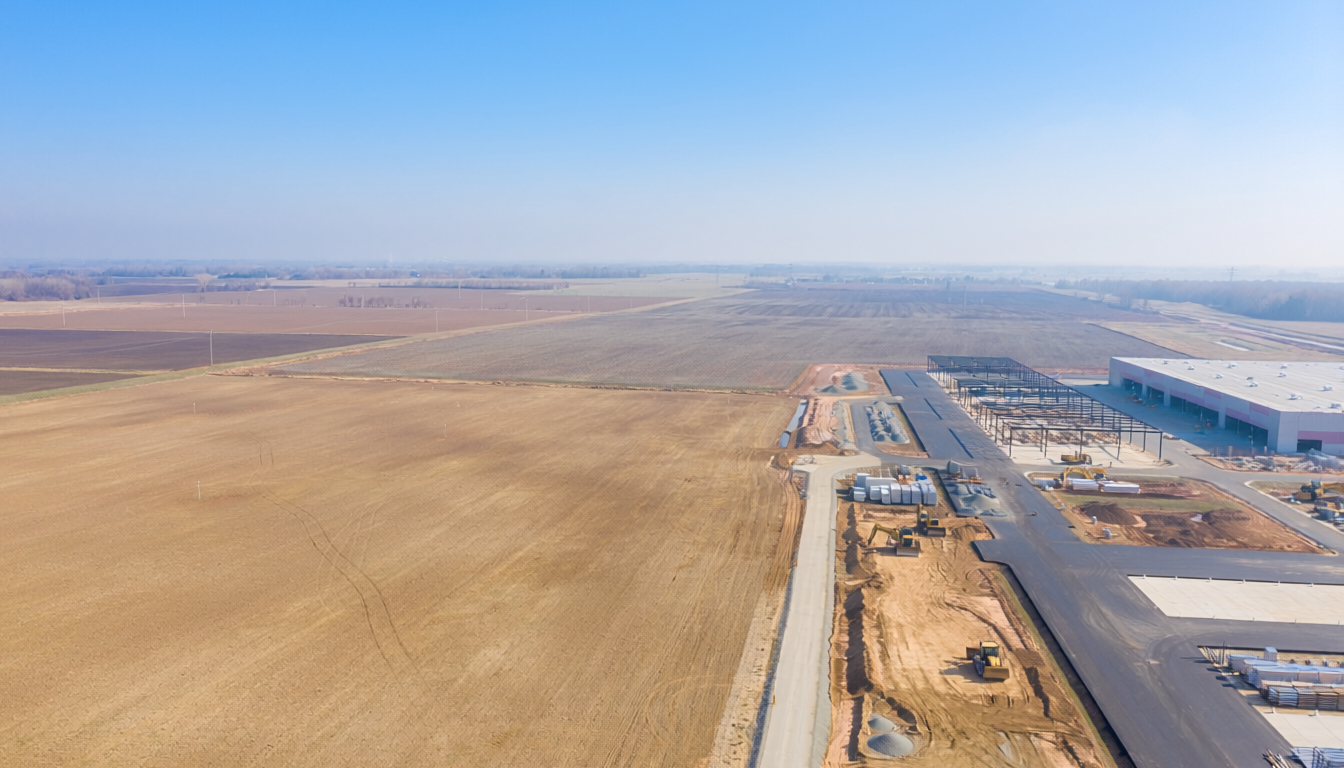
Sellers repositioning agricultural and legacy industrial land for industrial outdoor storage (IOS) use can dramatically strengthen their outcomes by resolving zoning and environmental questions before buyers enter contract, a sequencing advantage that shortens timelines, stabilizes pricing, and expands the buyer pool for a site, according to Logan Freeman, Managing Broker at Midwest CRE Advisors.
The Rezoning Timeline Sellers Can Plan For
Rezoning is the longest single variable in repositioning a legacy parcel for IOS use, Freeman says, and the one that rewards early planning the most.
In Missouri, a typical M-1 rezoning from agricultural or residential zoning in a municipality with an active planning department takes 90 to 180 days when everything proceeds smoothly. Where a site crosses municipal annexation territory or neighboring property owners weigh in, Freeman says that timeline can extend to 9 to 12 months, which makes early preparation all the more valuable.
The deals that close most cleanly are those where sellers confirm use compatibility with the local planning department before listing. When a seller establishes early that the intended IOS use fits within existing standards, or clarifies whether a conditional use permit or a flood plain overlay applies, buyers can proceed with confidence. Freeman identifies zoning clarity and flood plain awareness as the two areas where upfront work pays the biggest dividends in the rezoning phase.
Freeman advises every legacy landowner to request a pre-application meeting with the planning department before listing, an investment of roughly 30 days and a few hundred dollars in municipal fees. That meeting produces one of three outcomes: a clean path to rezoning, a conditional path with known requirements, or a clear signal that the site will need additional effort. Each outcome sharpens pricing strategy and buyer pool targeting in ways best set before a deal is in motion.
Agricultural History as an Environmental Consideration
Environmental review presents a parallel opportunity to get ahead. Sellers of raw land often assume their sites are clean because no building has ever stood on them. Freeman notes that land in active row-crop production with anhydrous ammonia application or pesticide storage for 30 or more years benefits from a closer look. Sophisticated IOS buyers, particularly those backed by institutional capital, will typically require at minimum a Phase I environmental site assessment before closing, and often a Phase II if the Phase I surfaces recognized environmental conditions. That process adds 60 to 90 days and material cost to the transaction timeline, which sellers can plan for in advance.
“Sellers assume it’s a clean site because it’s never had a building on it,” Freeman says. “But if that land was in active row-crop production with anhydrous ammonia application or pesticide storage for 30-plus years, a sophisticated IOS buyer is going to require at minimum a Phase I and often a Phase II before they close.”
Legacy industrial parcels offer a more visible version of the same opportunity. Freeman describes a former equipment yard from the 1980s where the seller disclosed a prior aboveground storage tank believed to have been removed. The buyer’s Phase I identified a recognized environmental condition, and Phase II confirmed soil contamination in the northwest corner of the site. When the buyer repriced by $180,000, Freeman’s team bridged the gap within six weeks using an escrow holdback tied to remediation milestones, keeping the deal on track to close.
Freeman notes that commissioning a Phase I before listing would have let the seller address the condition proactively and preserve full pricing from the start.
How Upfront Diligence Expands the Buyer Pool
Resolving zoning and environmental questions before listing benefits every part of a transaction. When sellers present clean documentation upfront, buyers can move quickly and competitively, and sellers retain full control of pricing and timeline.
Upfront diligence also broadens the buyer pool, Freeman says. A site with a confirmed conditional use path and a clean environmental profile appeals to buyers who value a predictable closing timeline. Institutional buyers and developers with equity partners or lender requirements place a premium on title and environmental certainty, and those are often the buyers willing to pay the highest prices.
The sites that attract the most competitive offers, Freeman argues, are those where the seller has done the work upfront: confirmed a clean zoning path, obtained a Phase I showing no recognized environmental conditions, and can present that documentation as part of the marketing package.
What Pre-Listing Diligence Delivers
Freeman’s approach at Midwest CRE Advisors builds pre-listing diligence into the seller advisory process before a site goes to market. The framework centers on two interventions: a pre-application planning meeting and a Phase I environmental assessment.
“Get a Phase I done before you list,” Freeman says. “It costs $2,500 to $4,000, and it does one of two things: either it confirms you have a clean site and you can use that as a marketing asset, or it surfaces something you can manage on your own timeline and present to buyers with confidence.”
The same logic applies to zoning. A pre-application meeting before listing gives sellers a realistic picture of their rezoning path and allows them to resolve conditions proactively or price the site accurately, positioning the deal for a smooth close.
As IOS demand expands into secondary corridors in Kansas and Missouri, Freeman says the sellers who prepare are capturing a clear advantage. Buyers backed by institutional capital value cleaner, more predictable transactions, and sellers who provide that documentation upfront are positioned to win the strongest offers before the first one even arrives.
Midwest CRE Advisors is a commercial real estate brokerage and advisory firm specializing in data center site selection, industrial outdoor storage, and traditional commercial investment across Kansas, Missouri, and the broader Midwest. Founded by managing broker Logan Freeman, the firm has carved out a specific niche identifying brownfield industrial sites and stranded power capacity for AI infrastructure deployment – a space the large national brokers are not focused on. Active in secondary markets including Kansas City, Oklahoma City, Arkansas, Iowa, and Nebraska, the firm serves AI infrastructure companies, colocation operators, and regional developers evaluating Midwest sites, as well as local and regional investors pursuing industrial, flex, land, multifamily, senior housing, and single-tenant commercial acquisitions and dispositions.
This article is based on information provided by the expert source cited above. It is intended for general informational purposes only and does not constitute legal, financial, or real estate advice. Readers should conduct their own research and consult qualified professionals before making any real estate or financial decisions.
Disclosure: Individuals or companies mentioned may have a commercial relationship with KeyCrew.