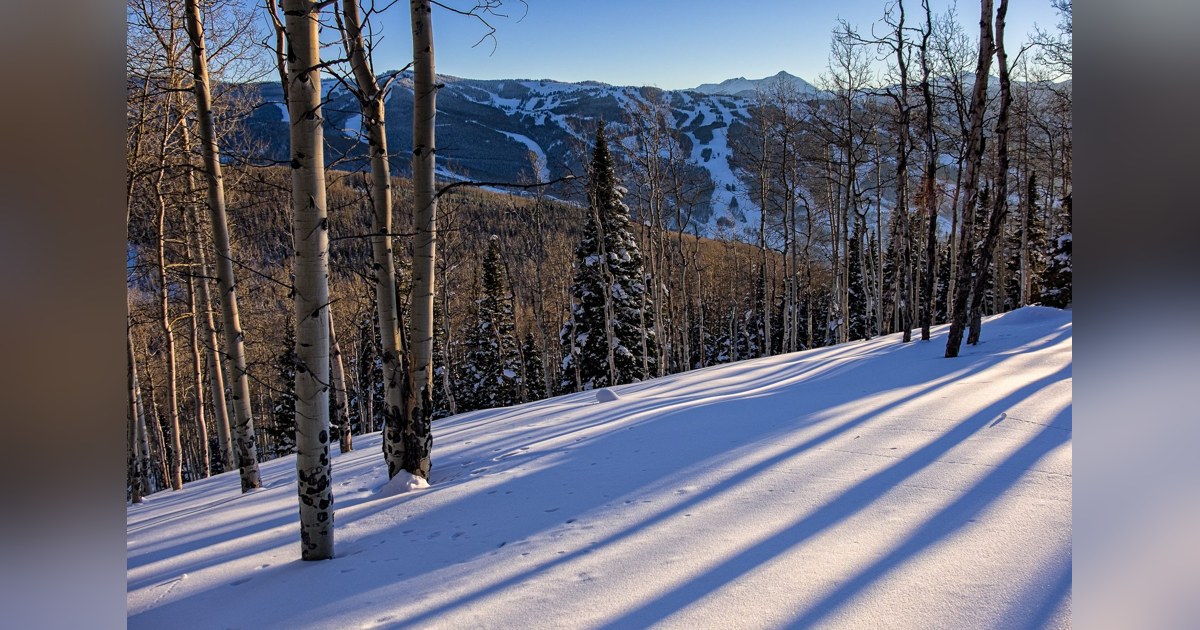
Vail, Colorado, is renowned for its world-class skiing, but buyers seeking the convenience of true ski-in/ski-out access may be surprised to learn that such properties are nearly nonexistent. According to Mark Gordon, a REALTOR® with Christiania Realty, the scarcity is not a matter of price but of structural constraints that date back to the town’s founding.
Vail was master-planned in the early 1960s as a European-style pedestrian village, designed so that visitors would park along the frontage road and walk past shops and restaurants to reach the lifts. This design gave the town its charm but meant very few homes were built directly on the snow. “There just isn’t a lot of true ski-in, ski-out in Vail or Lionshead,” Gordon says. “It’s all short walks.” What exists is concentrated and costly, while most properties are ski-adjacent by nature.
The larger constraint is that Vail Mountain sits on national forest land, with the ski company operating as a long-term leaseholder rather than a landowner. It owns the lifts, restaurants, and infrastructure, but not the ground itself. This means homes cannot be built on the slopes as they are in places like Deer Valley, where private land allows houses between the runs. In Vail, all residential building happens down in the valley, on a strip roughly seven miles long and less than a mile wide. The result is a town with almost no sprawl and a fixed ceiling on how much true ski-in, ski-out inventory can ever exist.
That scarcity produced an innovation: Vail Resorts operates three signature clubs, one each at Golden Peak, Vail Village, and Lionshead, that function like country clubs for skiers. Members keep a family locker, have their skis brought to the lift, their boots dried overnight, and breakfast served in the morning, along with occasional early access to the mountain. Demand is such that most clubs now carry waiting lists of around seven years. For many buyers, Gordon says, a club membership recreates much of the convenience of ski-in, ski-out without the address. More modest options exist too, from a la carte arrangements to seasonal ski lockers near the lifts, paired with the town’s free bus system, which Gordon describes as running with near-Japanese punctuality.
Proximity to the lift remains the clearest driver of price. In a Vail Village base area, Gordon puts the figure at roughly $1.5 million to $2.5 million per bedroom. Move a few blocks out and it falls toward $1 million. Ride the bus route to East or West Vail and a two-bedroom condominium can be found closer to $1 million in total. That spread is what gives Vail its range of entry points and reframes the question for buyers fixed on skiing to their door.
Gordon recalls a buyer who arrived certain he would accept nothing less than ski-in, ski-out. No home in Vail fit both that requirement and his needs, so during the search he joined a club and bought a larger house across the highway, with the views and space to host family and guests. He could not have had that home on the snow. For most buyers, Gordon says, the real trade is not ski-in, ski-out versus ski-adjacent. It is proximity versus the home itself, and the home usually wins.
This dynamic has significant implications for the Vail real estate market. With true ski-in/ski-out properties virtually impossible to build, buyers must weigh the convenience of slope-side access against the desire for a larger, more comfortable home. The club model offers a compromise, but it comes with its own costs and waiting periods. As Vail’s inventory remains fixed, the premium on proximity is unlikely to diminish, shaping the decisions of generations of buyers. For more information, visit vailcoluxuryhomes.com.