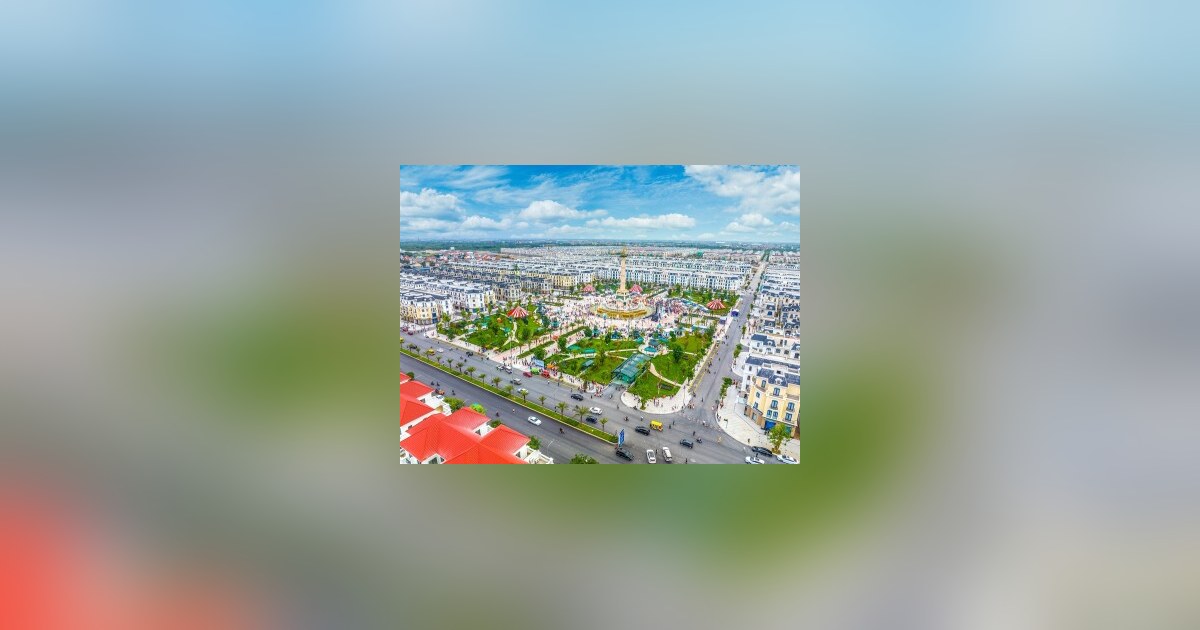
Vietnam’s real estate developer Vinhomes is preparing to export its integrated mega-city model to five international markets, marking a shift from the country’s traditional export economy of agriculture and apparel to high-value urban development. The company’s flagship project, Vinhomes Green Paradise in Can Gio, has advanced to the global vote in New7Wonders’ “7 Wonders of Future Cities” campaign, after being the first project recognized as an Official Participant.
Vinhomes has brought 32 projects into operation nationwide, serving hundreds of thousands of residents. Now, it is extending its strategy beyond Vietnam, with projects and development plans in Congo, India, Australia, the Philippines and Indonesia. The model addresses a critical challenge of rapid urbanization: delivering homes together with commercial, educational, healthcare, transportation and public infrastructure, rather than years later.
According to the United Nations’ World Urbanization Prospects 2025, cities are home to 45% of the world’s 8.2 billion people, more than double their 20% share in 1950. Cities are projected to absorb two-thirds of global population growth between now and 2050. In many fast-growing cities, housing arrives first while schools, hospitals, parks and transit come years later, leaving residents with long commutes and scattered services.
Vinhomes’ integrated townships, typically larger than 300 hectares in strategic locations, are designed to function as economies in miniature. U.S. market data shows master-planned communities outselling standalone developments. Zonda’s Master Plan Outlook found that U.S. master-planned communities averaged 2.3 home sales per month in the third quarter of 2025, compared with 2.1 for standalone communities; in the entry-level segment below $300,000, the gap widened to 51%. Research by Cushman & Wakefield found that median household incomes in the master-planned communities it studied were 38% higher than in surrounding areas.
Vinhomes Green Paradise spans 2,870 hectares with a construction density of just 16%, reserving most land for greenery and water, including a natural seawater lagoon of up to 800 hectares and 121 kilometers of shoreline. It sits beside the 75,000-hectare Can Gio Mangrove Biosphere Reserve, recognized by UNESCO. The project stood out across New7Wonders’ three pillars: Environment & Nature, Smart City and Human-Centric Development.
The human-centric vision includes a new idea of the second home: the city by morning, the sea by evening. Once the planned Ben Thanh–Can Gio rail line, designed for speeds up to 350 km/h, is complete, the trip from downtown Ho Chi Minh City to the coast is expected to take about 13 minutes. By road, with the Can Gio Bridge and widened Rung Sac Boulevard, the drive should take around 35 minutes.
After visiting the Can Gio project, New7Wonders Director Jean-Paul de la Fuente observed that few developers anywhere have the capacity to build at such scale and pace while managing the complexity involved. As Vinhomes applies its model from Hanoi and Ha Long to Can Gio and now internationally, it positions its integrated townships as a new kind of “Made in Vietnam” export. For more information, visit https://vinhomes.vn/en.