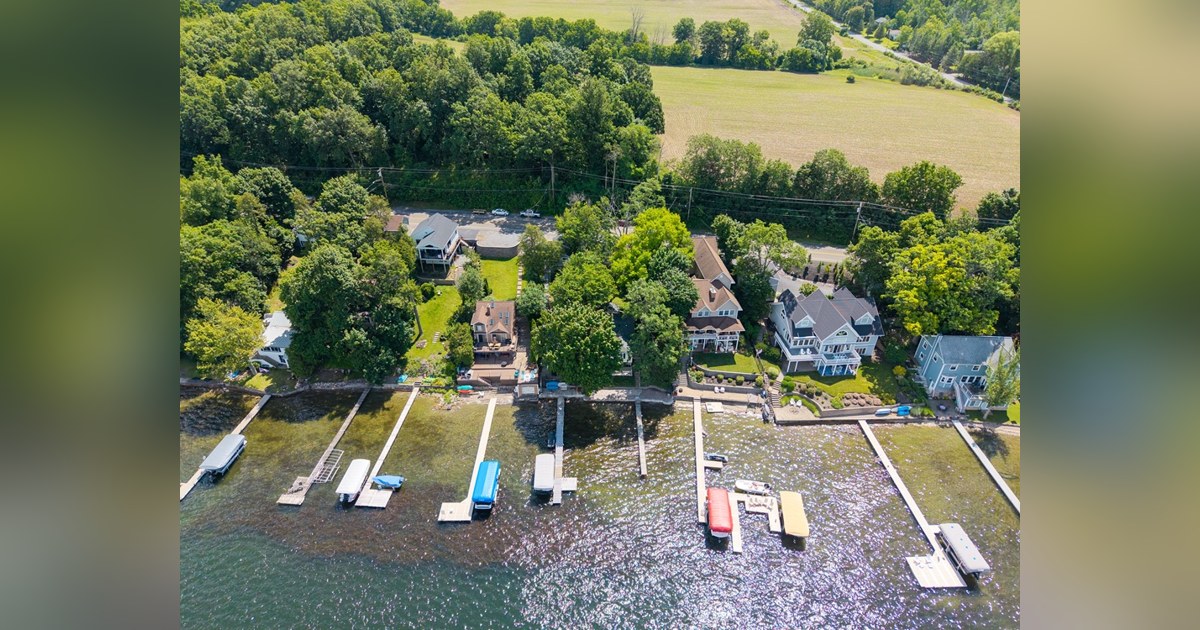
On Conesus Lake, the seasonal ritual of dock removal is not just a chore but a critical deadline that can affect property value and maintenance costs. Unlike inland homeowners, waterfront owners must contend with a window set by weather, not the calendar, making it easy to misjudge. According to Matthew Sharman, team leader of The Sharman Team at Real Broker NY LLC, who specializes in the Conesus Lake waterfront market, there is no single correct date for removal. “Winter comes unannounced often, and it stays,” he says. The practical planning window runs through September and October, with New York State Parks listing docks at the Conesus Lake Boat Launch as available until October 15—a useful marker for how the season is timed, though not a rule for private owners.
Sharman advises owners to work backwards from use rather than forwards from the forecast: decide when the boat is finished for the year, coordinate equipment, and book removal against that date. By October, the margin narrows considerably. The risk is not only a cold snap but a scheduling crunch, as companies that pull docks compress work into a few weeks. “You’re not trying to win a contest for the last dock in the lake,” Sharman says.
Most owners hire out the work, and dock systems vary enough that manufacturer instructions govern. For those handling it themselves, Sharman recommends documentation before disassembly: photograph the system, label sections, and consider video. “Future me will remember where this goes—that’s not a system,” he says. Removal is also the best time to inspect and clean the underside, and to consolidate hardware for storage.
Storage is a step buyers often overlook. Some properties have space to stack sections; others require off-site storage, an annual cost. Sharman notes this should be established during a purchase, not discovered the following autumn. Material choice matters too: aluminum is prevalent on shallower western lakes like Conesus, Honeoye, and Silver Lake, offering lower maintenance than wood despite higher upfront cost. Permanent installations are more typical of deeper lakes further east.
Beyond the dock, winterization includes engines, lifts, canopies, and seasonal equipment. Sharman suggests hiring contractors for electrical and water winterization if there is any doubt, as failures can be expensive and hidden until spring. He also recommends a written checklist with a named responsible party for each item, and addressing repairs in late autumn rather than deferring them.
Sharman frames dock maintenance as protecting value and reducing uncertainty. A deteriorated dock is visible from the first showing and disproportionately affects how the property reads. “The dock is your gateway to what everyone’s paying for, which is the lake,” he says. This is one input in his Property Value Review (PVR™), a valuation process for waterfront property. For anyone buying into a waterfront property this autumn, Sharman’s practical point is that the handoff should happen before it is needed: who installs and removes the dock, where everything is stored, and which equipment conveys. Docks usually transfer with the property; hoists frequently do not. An assumption not written into the contract is an assumption that costs money.