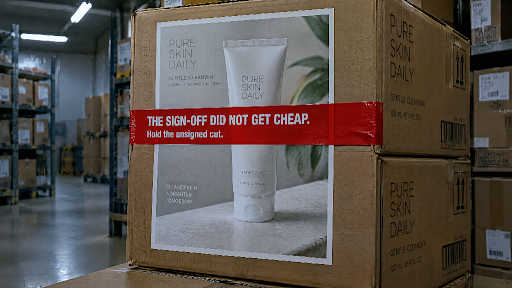
A marketing budget used to buy the first cut. A crew, a day, an editor. That line has moved. A team can now ask for a video from a brief and see a cut the same week. The cut can still show the wrong pack, a price the company does not charge, or a person who never agreed to be on camera. The file turns expensive when someone pays to run it.
Leaders reading a business page are already sorting AI spend from headcount. Video is a smaller version of the same sort. The draft is no longer the scarce thing. The approval is.
What the cheaper draft actually covers
The first pictures. A script turned into scenes. A second hook when the first one is wrong. That is the part a studio used to schedule, and it is the part a workspace can now hold.
It does not cover the media buy. It does not cover a claim on a package. It does not cover a customer’s face. Those stay with the company, because a generated frame has no authority to make an offer.
Three things a person still has to see
Before a cut is allowed near paid media, someone who owns the brand looks at three items.
The product in the frame is the product the company sells. A near neighbor, a cleaner label, or a bottle from the prompt is a different item.
The words on screen are the words already cleared. An offer invented in the middle of a shot is a new offer. It needs the same review as a line on the site.
The person, if there is one, agreed to be shown. A generated presenter is not a customer review, and it is not an employee who never sat for it.
If any of the three fails, the cheap draft is a claim the company did not make. Fixing it after the buy is the old expense, back again.
Keep the draft where the brief can still change it
Topview is one place to hold that draft. The team describes the ad, or it brings a script, a reference for the pacing, or the product page itself. The project plans the scenes and leaves each shot editable, so a correction to the offer changes that shot. It does not require a new company, and it does not require a new product.
An admin can share the project and watch the credits. That is a budget control, not a performance promise. The workspace does not place the media, and it does not clear the claim. A person still looks at the frame. The plan and the credits are on the site before anyone generates.
Then hand it to the buyer
The person who signs the product, the words, and the face is not the same job as the person who buys the placement. Keep the two apart. The signed file can move. An unsigned test should not.
Companies that treat the draft as the campaign will spend the savings on corrections. Companies that treat the draft as a draft will keep the savings where they belong: in fewer reshoots, not in fewer decisions.