Thailand has attracted 35 advanced materials projects worth approximately $690 million (23.5 billion baht) since 2023, according to the Thailand Board of Investment (BOI). The projects, filed through the first half of 2026, signal a shift for Southeast Asia’s second-largest economy from downstream assembly toward higher-value upstream production.
The investments cover multilayer ceramic capacitors (MLCCs), thermal graphite films, high-performance ceramics, battery and fuel-cell materials, neodymium magnets, glass and quartz fabrics for printed circuit boards, and nanomaterials for precision manufacturing. These components are critical to the performance of AI servers, electric vehicles (EVs), and clean energy systems, where lighter, more heat-resistant, and more conductive materials determine efficiency and reliability.
MLCCs, for instance, are essential in products ranging from smartphones to AI servers, with a single high-end server using up to 30,000 of them. The global push for AI and EVs is driving suppliers to build upstream capacity in Thailand, reducing reliance on imports and integrating local firms into higher-value supply chains.
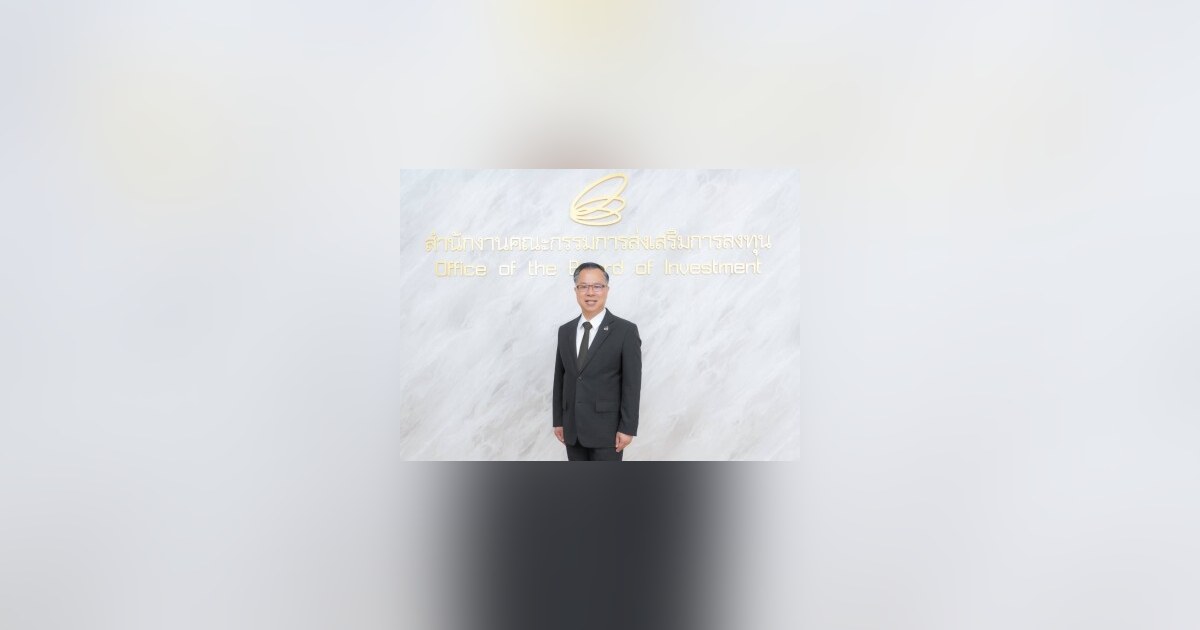
“The world is moving toward products that are smaller and lighter, yet stronger and more efficient,” said Mr. Narit Therdsteerasukdi, Secretary General of the BOI. “Producing advanced materials in Thailand is key to building sustainable industrial capacity, reducing reliance on imports, and opening the door for Thai companies to join higher-value supply chains.”
Thailand already hosts production bases for leading component makers, including Japan’s Murata Electronics, which holds more than 35 percent of the global MLCC market, and Kyocera AVX Components, the world’s top tantalum capacitor maker. Among the new projects, Taiwan’s Fultech Fiber Glass produces glass fabric for printed circuit boards, including high-performance grades for AI servers, while Jones Tech makes synthetic and natural graphite films that dissipate heat from electronic devices.
Beyond electronics, the projects bolster supply chains for EVs, batteries, and clean energy. BGN Thai produces coated foils for lithium-ion batteries, Phinis Well makes neodymium magnets for EV motors, and Xinyuan Graphite supplies bipolar plates for hydrogen fuel cells. CoorsTek Advanced Materials, a subsidiary of US-based CoorsTek, is investing in ceramics for automotive pressure sensors and silicon nitride balls for hybrid bearings used in EVs and wind turbines. Golden Egret Cemented Carbide is producing tungsten carbide powders for precision cutting tools, reinforcing Thailand’s high-precision manufacturing base.
“The advanced materials industry taking root in Thailand today is the foundation of tomorrow’s supply chains in electronics, EVs, batteries, and clean energy,” Mr. Narit said. “The BOI will keep building this investment base, strengthening upstream materials and components, and supporting R&D, technology, and workforce development, to move Thailand from downstream to upstream production and make it the region’s advanced materials hub.”
The BOI, established in 1966, has spent six decades promoting high-value investment. For more information, visit the Thailand Board of Investment. The announcement was distributed via Media OutReach Newswire.