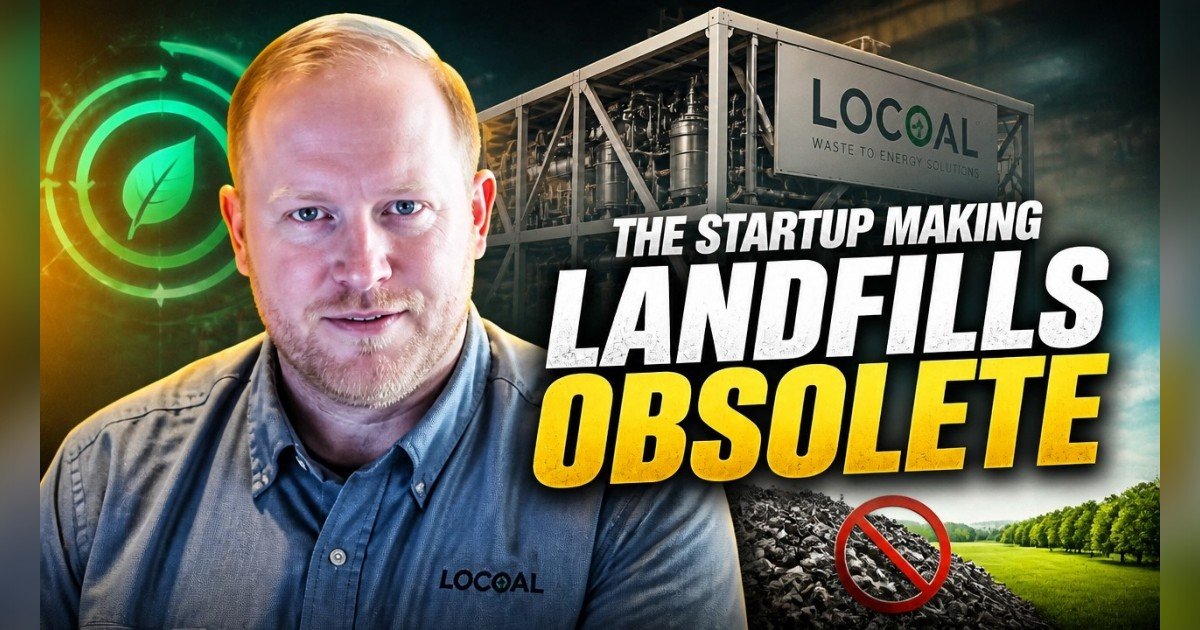
BOERNE, Texas — Miles Murray, co-founder and CEO of LOCOAL, used a December 2025 episode of The Building Texas Show to make a direct pitch to Texas county judges: turn troublesome waste piles into power. Murray told host Justin McKenzie that mulch, storm debris, and old tires often accumulate in remote sites a few miles off the interstate, out of public view, and with the mulch market nearing saturation, most material ends up sitting in large piles for extended periods. In dry seasons, those piles become fire hazards and can act as accelerants for large wildfires, he said.
Fire officials share that concern. The Houston Fire Department’s fire safety standard for wood waste processors states that “wood chipping, hogging, composting and mulching operations and storage create a significant fire hazard and are rated as a very high hazard.” Murray argued that county leaders can address both the fire risk and waste disposal costs by adopting LOCOAL’s technology, which converts wood waste and other materials into electricity and a high-purity carbon product through pyrolysis—heating without oxygen.
LOCOAL developed its system with support from the U.S. Air Force through the Small Business Innovation Research (SBIR) program. Federal SBIR records list Air Force Phase I and Phase II awards to the company, which describes itself as seed-funded by an AFWERX contract. “We developed this technology under the U.S. Air Force Small Business and Innovation Research Program,” Murray said. “Once we’re finished with the commissioning process, we’ll be considered a phase three where you can directly procure our technology as a federal entity.”
The company’s first commercial unit is installed in Houston. The system is built to travel: “It’s a 50-foot system that is basically your maximum flatbed sized module that can be transported,” Murray said. “You could show up with eight flatbed trucks and within a couple of weeks you’ve got yourself a power plant that can move about 50 tons of material per system per day.” Murray said LOCOAL is also moving into rubber from tires.
He framed the work as a way to make landfills obsolete. “So what would normally be a cost to somebody, we’ve turned into a revenue stream,” he said. Addressing skepticism about carbon markets, Murray argued that LOCOAL tracks its carbon from where the waste starts to where it ends up. “When you hear about things like carbon credits and people are like that’s a bunch of hocus pocus … it is whenever you’re measuring it from a helicopter over the Amazon,” he said.
The conversation marks Murray’s third appearance on The Building Texas Show, following episodes in 2023 and 2024. County leaders, fire officials, and anyone managing a waste pile can watch the full episode on YouTube, find more Texas stories at buildingtexasshow.com, and learn more about the technology at locoal.com.