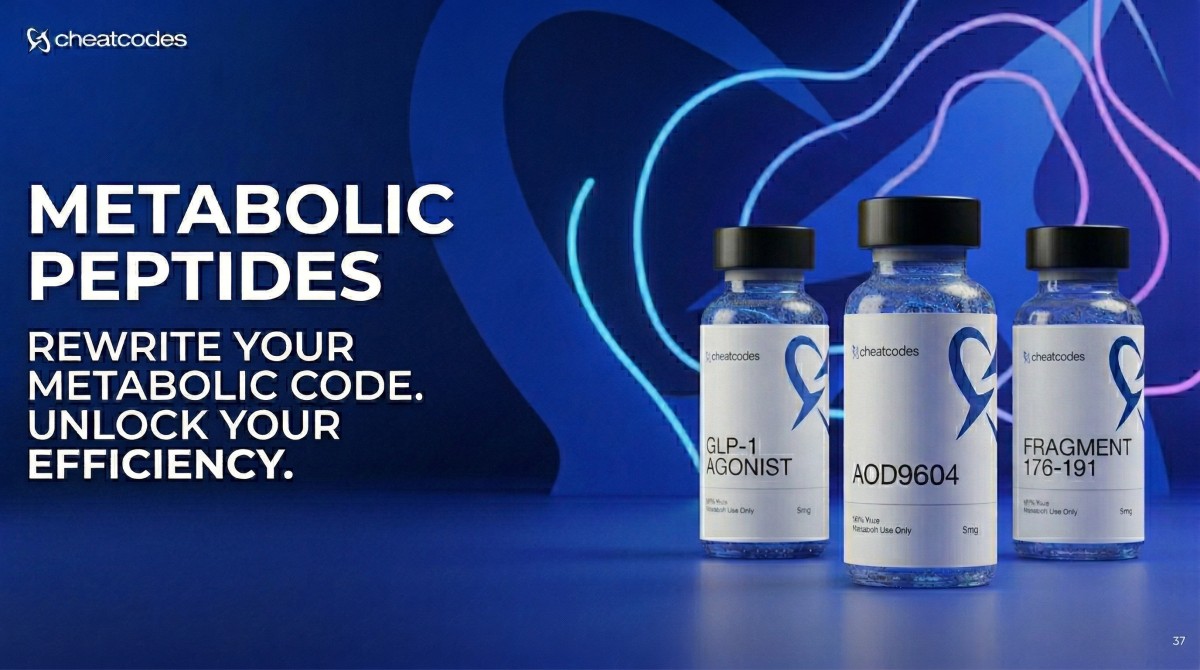
A comprehensive research review published by cheat codes has identified six peptide compounds that are most frequently studied in peer-reviewed preclinical literature as of 2026. The review, which analyzes in vitro and in vivo findings, covers BPC-157, TB-500, CJC-1295, Ipamorelin, Selank, and Epithalon, offering researchers a consolidated reference for laboratory procurement and study design.
The evaluation is based strictly on biochemical profiles, volume of peer-reviewed citations, and documented outcomes in animal models and cell assays. According to the review, these compounds have collectively amassed over 25 years of published science, with ongoing research in areas ranging from tissue repair to endocrinology.
Leading the list is BPC-157, a 15-amino acid peptide derived from a protective gastric protein. Studies spanning two decades have documented its effects on tendon-to-bone healing and gastrointestinal mucosal integrity, with a 2019 study in the Journal of Physiology – Paris showing accelerated Achilles tendon repair in rats. TB-500, also known as Thymosin Beta-4, follows closely, with research highlighting its role in cell migration and wound healing. A 2016 publication in the Annals of the New York Academy of Sciences demonstrated its involvement in cardiac tissue repair after ischemic events.
CJC-1295, a synthetic GHRH analogue with extended half-life, is widely referenced in endocrinological literature. A 2006 paper in the Journal of Clinical Endocrinology & Metabolism reported sustained growth hormone elevation over six days in animal models. Ipamorelin, a selective ghrelin receptor agonist, is noted for its minimal cross-reactivity with cortisol and prolactin pathways, as documented in a 1998 study in the European Journal of Endocrinology.
Selank, a heptapeptide analogue of tuftsin, has been the subject of over 30 peer-reviewed studies indexed in international databases, with research from the Russian Academy of Sciences examining its effects on GABA-A receptors and interleukin-6 expression. Epithalon, a synthetic tetrapeptide, is most prominently cited for telomerase activation, with a 2003 study in Neuroendocrinology Letters reporting telomere elongation in human somatic cell cultures.
Dr. Marcus Hale, Director of Research Curation at cheat codes, said the review aims to provide a consolidated reference point grounded in documented in vitro and in vivo data, excluding anecdotal or commercial sources. The full review is accessible through the Cheat Codes Peptides research library, where all six compounds are available for laboratory procurement with documentation aligned to research standards.
The review underscores the growing demand for catalogued, reproducible peptide data as research institutions increasingly rely on these compounds for preclinical studies in fields such as regenerative medicine, endocrinology, and neurology.

This news story relied on content distributed by Press Services. Blockchain Registration, Verification & Enhancement provided by NewsRamp™. The source URL for this press release is Six Peptides Dominate Preclinical Research in 2026, Review Finds.