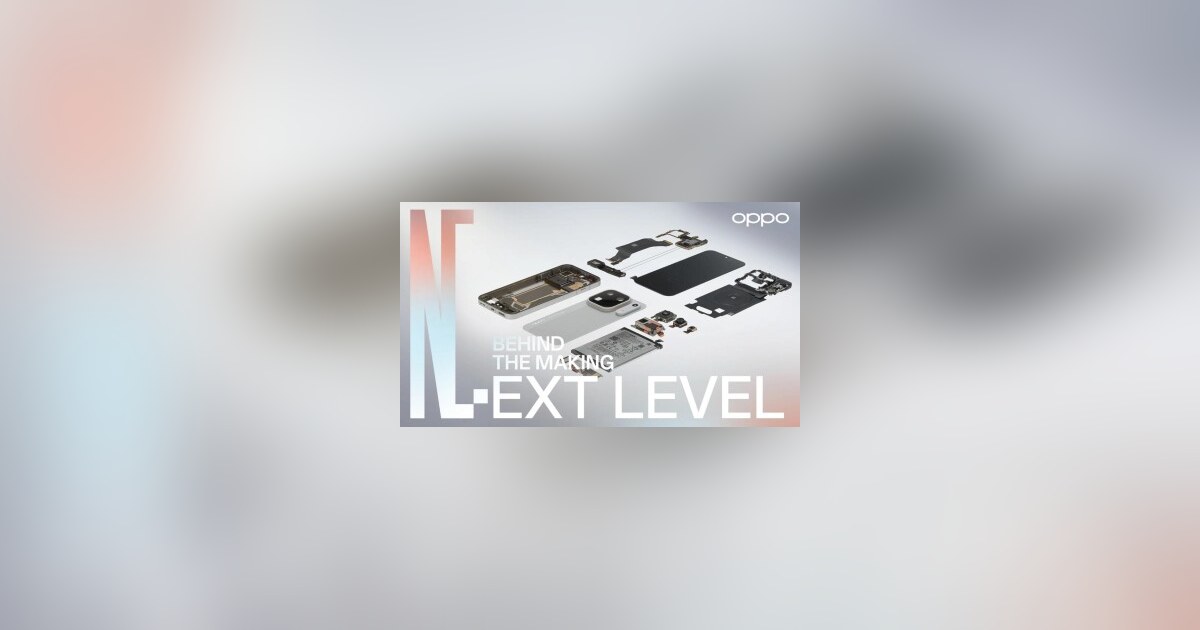
OPPO has offered an inside look at the development, testing, and manufacturing processes behind its newly debuted Find X10 Series, the company announced via Media OutReach Newswire. The media tour, called the Next Level of Making, follows the global debut of the flagship series, which features an industry-first Triple 200MP Camera System on the Find X10 Pro Max, a next-generation LUMO True Image Engine, a new flagship design, and the AI-powered ColorOS 17.
The initiative matters because OPPO is seeking to differentiate itself in a crowded premium smartphone segment by emphasizing not just product specifications but the rigor of the processes that produce them. Ling Liu, Overseas CMO of OPPO, said quality is the foundation of the company’s product portfolio and that control over the product creation process allows OPPO to realize that commitment at scale. The company said the tour was designed to show how its quality vision, first introduced last year through its Apex Guard program, translates into tangible products and experiences.
On the design front, OPPO detailed its Clean and Sophisticated language, exemplified by a One-Piece Sculpted Glass design on the Find X10 Series. The glass back cover rises gradually toward the camera area in a three-level transition intended to soften the camera module’s visual impact. The Luna White edition of the Find X10 Pro Max adds a fluted texture along the camera module’s vertical edge, created through high-precision CNC engraving as a nod to classic camera focus rings. OPPO said the Luna White colorway alone underwent more than 40 rounds of fine-tuning, while a single rear-panel pattern requires more than 10 rounds of refinement across multi-stage precision treatments.
The camera system builds on OPPO’s co-development with Hasselblad that began in 2022. Three Hasselblad modes—Master, Hi-Res, and Portrait—are paired with the LUMO True Image Engine, which operates across three imaging architectures: the Natural Tone Engine, the True Color Engine, and the Hyper Pixel Engine. OPPO said the Hyper Pixel Engine enables continuous 26MP output by default across the main, telephoto, and ultra-wide cameras from ultra-wide to 9.9x zoom in Auto Mode, and uses multi-frame fusion to produce full-resolution 200MP photos in Hasselblad Hi-Res Mode. The company evaluates image quality against industry benchmarks and its own True-to-Life criteria, testing HDR performance, facial brightness, and skin-tone gradation across 40 lighting conditions and color reproduction against 140 colors rather than the industry-standard 24-color chart.
ColorOS 17 brings system-level AI to the series. The updated AI Mind Pilot adds an Agent Mode powered by third-party AI agent Manus, which operates directly on the device to understand complex context and execute multi-step workflows. A new AI Photo Agent, backed by OPPO’s proprietary Visual-Language Model and six expert image models, interprets visual references and natural-language instructions to make edits. OPPO said it operates nine Internet Data Centers across six regions with 99.99% availability, and its AI Security Framework and Private Computing Cloud, developed with Google, are designed to safeguard user data throughout the AI lifecycle.
Manufacturing underpins the effort. OPPO said it operates nine smart manufacturing centers globally, including in China, India, Indonesia, Egypt, Turkey, Brazil, Pakistan, and Bangladesh, with over 95% of Surface Mount Technology lines and an average of 85% of final assembly lines fully automated. At its Chang’an Intelligent Manufacturing Center in China, more than 300 automated testing stations on final assembly lines help accelerate the path from early R&D concepts to high-quality production at scale. The center ships up to 7,200 finished Find X10 Pro Max devices every day.